So I'm working on one of those New England families upon which the
sources disagree or themselves express uncertainty. I am entering my
notes and sources on James Hovey's profile for what I've found so far.
The
Hovey part of the equation is pretty solid: Daniel the immigrant lived
for a time in Ipswich and then moved to the new community of Quaboag
(now Brookfield) in 1668. His son Daniel Jr. stayed behind in Ipswich,
and son James came to Quaboag, started a family and then was killed by
Native Americans in 1675. All the sources agree on these facts. It's
also well established that Daniel Jr. married Esther Treadwell in 1666
and had several children. He died in Ipswich in 1695 and his will is in
the Hovey Family Book that is referenced.
All the sources
I've seen indicate that Daniel Jr. had a first wife named Rebecca who he
married in Ipswich and who died giving birth to their first child, a
son named Daniel, in 1665. Torrey's New England Marriages prior to 1700
lists this Rebecca as Rebecca Dane, but with a question mark by the
name.
The Dane Family records, indicate that Rebecca Dane
was John Dane's daughter, but that she married James Hovey, not Daniel.
The Hovey book's theory is that, yes, James Hovey's wife was John
Dane's daughter, but that her name was Priscilla and she was the mother
of James Hovey's three children in Quaboag.
I believe the
source of this is that in John Dane's will in 1684, he leaves 30 pounds
to his grandson, Daniel Hovey, who had not yet reached adulthood. This
could refer to either family in the Hovey Book because both families had
a son named Daniel, but it leans much more heavily towards James
Hovey's son. If you go to the page for James' son Daniel (page 62), it
is noted that he received a sum from John Dane his grandfather and that
he became a doctor.
In Daniel Hovey Jr's will from 1695, there is no mention of a son Daniel and there don't appear to be any records of this
son after his birth in 1665. You'd have to surmise that he died shortly
after his birth, and that thus he is not the grandson John Dane was
referring to.
The records of the town of Quaboag seem to tell
a different story altogether, however. They have James Hovey married
to Priscilla Warner, daughter of John Warner and Priscilla Symonds.
They indicate that James' three children are all children of Priscilla Warner and thus would not be related to the Danes.
From
my vantage point here at my computer in California, I'm unable to go
digging through the actual source material, so I'd love additional input
from folks who have access to either the originals, or other secondary
sources that might shed light on this confusion.

Showing posts with label Dane. Show all posts
Showing posts with label Dane. Show all posts
Saturday, November 22, 2014

Tuesday, November 11, 2014
Global Family Reunion Connection to Immigrant Ancestor John Dane
Are y'all prepared for some serious family-tree related gloating?
Well, I hope so because I've found a direct connection between James Spader and the colonial immigrant ancestor/progenitor of the Dane Family in America, John Dane. Turns out that James' Forster/Foster forebears, from his great grandmother Elizabeth Thompson Forster (Bowditch) are descended from Reginald Foster and Elizabeth Dane, John Dane's daughter. I am a direct male line descendant of his son John Jr.
In terms of the global family reunion the effect of this is not huge - John Dane was already at 18 steps and he will be at 16 steps after the system updates tonight. My own personal connection will remain the same because my Higginson connection is still closer.
But I'm sure you'll understand the significance for me personally of making this connection through my surname. Who knew a few days ago that this is where my research was heading?
Of course, giving credit where it's due, I have to mention Frederick Clifton Pierce's book "Foster Genealogy" upon which this line relies. I verified all of his work against whatever sources I could, but there are a couple of points where his work is the only link.
Sunday, June 2, 2013
Francis S. Dane Jr. Sails With the Byrd Expedition

Lexington Minute-man, October 11, 1933
Francis S. Dane Jr. Sails With the Byrd Expedition
Well Known Local Young Man Departs on the Jacob Rupert as One of the Dog Drivers. Dane Spent the Summer at the Chinook Kennels at Wonolancet, N. H.
Francis S. Dane Jr., son of Mr. and Mrs. Francis S. Dane of 1 Bennington road, sailed Wednesday, October 11, on the Jacob Rupert, which left Boston Navy Yard for the first lap of its journey to the South Pole with the supplies and dogs for the second Byrd Antarctic Expedition. Whether “Duke” Dane as he is popularly known, will go all the way to the South Pole is as yet uncertain, but he will go with the expedition at least through the Panama Canal, and probably to the “jumping-off-place” which at present appears to be Valporaiso, South America.
Since the middle of July Mr. Dane has been at the Chenook Kennels, in Wonolancet, N.H. assisting in the care and training of the huskie dogs for the expedition. During a considerable part of August and September he was unofficial charge-d’affairs where Byrd’s dogs were concerned, in the absence of Norman Vaughan and Allen Taylor who have successively been responsible for this division of the expeditionary forces.
The work at Wonolancet included the exercise and care of 150 dogs each of whom has to be given a run at least once each day besides being fed and supplied with water, the latter becoming one of the great problems owing to the continued drought in that section of New England. With but four regular men on duty the dog drivers were kept busy often 12 to 13 hours a day. Beside the work at the kennels trips had to be made to Canada to secure more dogs from time to time, as only those really fit can be taken on the expedition. This meant driving hugh trucks to Canada, loading them with crated dogs, and making the return trip, the latter usually without stopping for sleep as the howling of the dogs is not welcomed in most towns and villages. Mr. Dane made several such trips during the summer.
Last Friday night the dogs were brought to Boston on trucks a journey which took from 10 p.m. to 5 a.m. and on Saturday they were put onto the dock at the Navy Yard, where several local people visited them over the week-end. The crates were places in double rows on top of each other and once each day every dog was removed from the crate and given a chance to move about the deck at the end of a chain while his box was being cleaned. The dog-drivers of the expedition, including Mr. Dane were in charge of this work.
On Monday each dog had to be taken from the crate, run up the gang plank and held on deck while the crates were being loaded over the side of the Ruppert by the crew. Until the ship leaves Norfolk sometime next week the dogs must remain in their cages which are just large enough for them to turn around in. They are oblong boxes, made of stout wood reinforced by three bands of metal and having a front door of stout iron and wire mesh secured with a metal latch. When the ship leaves Norfolk the dogs will be taken from the crates and chained to the deck where they will have somewhat more freedom.
On the trip through the tropics the dogs lie on the ship and pant; they do not want food, or even much water. Some will not survive the trip, especially if the hot weather lasts over an extended period. This is one of the reasons for taking so large a number as 153 which are at present on board.
The duties of a dog-driver on such as expedition as this planned by Admiral Richard E. Byrd are anything but a pleasant game. It is the hardest type of physical labor, under often unbelievably trying conditions, but if one is not afraid of the work, likes the sea, and has a real love for and understanding of dogs it is one of the greatest adventures and opportunities which can come to a young man. “Duke” Dane has the qualities which will make for success and has more over no illusions about the hardships into which he is going. Not only has he worked with this particular Expedition all summer, he has also been with one of the North Polar Expeditions of Captain Donald B. MacMillan as far as the ice, and knows what to expect on a sea voyage. Although somewhat tired from the lack of sleep during the past weeks, he is in excellent physical shape and is in everyway prepared for the great adventure. His many friends wish him Bon Voyage and a safe return.
Wednesday, May 22, 2013
My Family's Murder Mystery

September 9, 1982. A
young woman is reported missing when she doesn’t arrive for work at Eskaton
Monterey Hospital (now Community Hospital of the Monterey Peninsula). She is a twenty six year old nurse in the
prime of life with a promising career, a supportive family and a brand new fiancée. She is also a river rafting guide who friends
describe as “enthusiastic about everything,” and as someone who lights up a
room when she walks in. Later that same
day of September 9th, the young woman’s station wagon is found in
the center median of Highway One.
Beneath a pile of blankets, the young woman’s dead body is found, raped
and strangled. The young woman’s name
was Sarah Lucy Dane and she was my Aunt.
Suspicion immediately centered on Sarah’s brother-in-law, William Perkins. The night before her murder, Sarah’s sister Meraud “Roadie” Perkins had told Mr. Perkins that she was filing for divorce. Angered by her declaration, Mr. Perkins allegedly threatened to do something that would put him in jail for a long time. He was known to have been away from his home during the time of the murder and didn’t arrive for his job at 5 A.M. that morning. In fact, he didn’t arrive on the job site until noon. However, when police investigated the crime in fall of 1982, they did not find enough evidence to prosecute Mr. Perkins for the murder. Two long years would pass before the case would be re-examined by a new investigator.
In September of 1984, the evidence in Sarah’s case was re-analyzed by state justice laboratories. It’s not entirely clear why the case was re-opened, but certainly the tireless efforts of Sarah’s mother Sally Dane to ensure that the police continued to pursue the case played a part. As a result of the re-analysis, William Perkins was again arrested. While he was being held, Perkins had a fateful conversation with his cellmate, Joseph Neuhaus, where he confessed to the rape and murder. On February 5, 1985, Perkins was tried and convicted of rape and murder. Shortly after the trial, authorities learned that the man who testified as Joseph Neuhaus had lied about his identity and was actually a man named Marty Joe Nuttall. This revelation threw the conviction and sentencing of Perkins into jeopardy, however the judge in the case decided that the conviction would stand and Perkins was sentenced to 25 years to life for First Degree Murder.
All of this information was passed along to me recently by a member of the family who was close to Sarah Lucy. Unfortunately for me, I never got to have a relationship with my Aunt. That seems strange to say since she lived only about three hours’ drive from me for the first twelve years of my life. But that has been part of the sad legacy of the broken family left behind by my grandparents’ divorce. I met my grandfather only three or four times before he died in 1979, and no one on “our side of the family” was close with him or his daughter by his second wife. This is yet another family member I get to meet only through the memories of others. I feel a responsibility to remember these relatives and pass along what little I can of them so others can remember them a bit, too.
Facts for this post were taken from articles from the Monterey Peninsula Herald regarding the murder case and trial from 9/24/1984, 10/25/1984, 1/29/1985, 1/30/1985, 2/5/1985, 2/27/1985, and 3/14/1985
Saturday, April 27, 2013
Obituary for Hon. Joseph Dane Jr.
 This is the obituary for my 3X great grandfather's brother.
 BANGOR DAILY WHIG AND COURIER
Tuesday, March 18, 1884
OBITUARY
DEATH OF THE HON. JOSEPH DANE
PORTLAND, March 17--Hon. Joseph Dane died last evening at his home in Kennebunkport of inflammation of the bladder, aggravated by a severe cold, aged sixty-one. He was a most prominent man in York County.
He was born in Kennebunk, graduated from Bowdoin College in 1843 and immediately began the study of law in Kennebunk, and was admitted to practice in 1846. At the time of his death he was President of the Ocean National Bank, of the Kennebunk & Kennebunk Railroad, Treasurer of the Kennebunk Savings Bank, Overseer of Bowdoin College, President of the Maine Unitarian Association, besides holding other positions of trust. He was Democratic candidate in 1882 for Representative to Congress from the first district. He leaves a widow. Funeral Wednesday pm.
Thank you to an anonymous contributor on Findagrave.com for passing this along to me - Kyle
Sunday, April 21, 2013
South Pole Expedition II - Admiral Richard Byrd 1933-34

I've built a board on Pinterest (see the box below for the link and a sample of the images) to collect all the images, writings and anything else related to Admiral Byrd's Second South Pole Expedition from 1933 to 1934. My grandfather, Francis S "Duke" Dane II was a member of the expedition (the highlight of his life, really). He kept a multitude of things, including equipment from the trip, which I have stored at my house.
The photos also have their own set at Flickr here: Admiral Byrd's South Pole Expedition II
Friday, April 12, 2013
Dane Family History Board on Pinterest

The photo at right that goes along with this post is of my great aunt, Marcia Winter Anderson Dane. Probably taken in the 1920's when she was a teen or young woman.
The nifty box below is Pinterest's way of displaying just the Dane Family Board on this or any other website. Pretty cool.
Sunday, August 12, 2012
Danes in the Salem Witch Trials

One of my birthday presents was the historical fiction novel 'The Physick Book of Deliverance Dane' by Katherine Howe which I'm now almost finished with. Despite the familiar last name, I was not aware that Deliverance Dane was a real person, but she was. As it turns out, I already had her in my own family tree files but didn't realize it until after I received the book.
I did know that one of my direct ancestors, John Dane, was one of the jurors in the Salem Witch trials, and I had a general sense that we had relatives who were accused as well but didn't know any of the specifics. This book got me started looking into the family history in the trials and I was able to find a great deal more just from searches on the internet.
The first Danes to arrive in New England were John Dane and his wife Frances Bowyer and their three grown children John, Francis, and Elizabeth. The Danes all lived in Andover and Ipswich, towns near Salem, north of Boston.
1. John Dane = Frances Bowyer
-- 2. Elizabeth Dane (later Howe or How)
-- 2. Dr. John Dane
-- 2. Revd. Francis Dane (Named but never officially accused or charged)
What struck me when I was researching all this is that once a family was accused, the entire household was typically either accused or actually charged. This was particularly true for the Reverend Francis Dane. He was the pastor at Andover for over 40 years and by 1692 he was 76 years old. He had a long-running dispute with the town because a younger pastor was brought in in 1682 and the two were splitting the typical salary of the town reverend. Two of his daughters and his daughter-in-law (Deliverance) were accused of witchcraft.
-- 2. Revd. Francis Dane = Elizabeth Ingalls
---- 3. Hannah Dane
---- 3. Elizabeth Dane (Johnson) - Found Not Guilty
---- 3. Phoebe Dane
---- 3. Abigail Dane (Faulkner) - Found Guilty, not executed because she was pregnant, later pardoned
---- 3. Nathaniel Dane = Deliverance Hazeltine - Accused
---- 3. Francis Dane
Following the theme, the children of these accused women were also arrested:
---- 3. Elizabeth Dane (Johnson) = Stephen Johnson
------ 4. Elizabeth Johnson (age 22) - Found Guilty/Pardoned
------ 4. Stephen Johnson (age 14) - Indicted/Not Tried
------ 4. Abigail Johnson (age 11) - Accused
---- 3. Abigail Dane (Faulkner) = Francis Faulkner
------ 4. Dorothy Faulkner (age 10) - Released on Bond
------ 4. Abigail Faulkner (age 8) - Released on Bond
I'm going to include a spoiler here regarding Deliverance and her family. In case you were unclear, Katherine Howe's novel is fiction and clearly the events in the book for Deliverance and her family and the names of the various players directly involved with her are composites. If you think finding out what really happened to Deliverance and her family will ruin the book for you, stop reading here.
Okay, for those still with me, the real-life Deliverance and Nathaniel actually had seven children, five of them born prior to 1692. In the book, they only have one. In any case, I haven't found any records indicating that they were involved in the trials. Deliverance's own story (like in the book) is obscured from the records and it's unclear whether she was ever arrested. She wasn't executed. She had two children after 1692 and lived until 1735.
Another family member wasn't so lucky, though. Revd. Francis's nephew James Howe's wife Elizabeth was one of the 20 people executed. Her granddaughter also accused along with several other family members (not mentioned here).
-- 2. Elizabeth Dane (Howe) = James Howe
---- 3. James Howe Jr. = Elizabeth Jackson (Howe) - Guilty/Executed
---- 3. Sarah Howe (Bridges) = John Bridges
------ 4. Sarah Bridges (age 20) - Not Guilty
By the way, in her bio, Katherine Howe indicates that she is a descendant of the unfortunate Elizabeth Jackson Howe, which means that she is also a Dane descendant.
Not to be forgotten is Dr. John Dane, whose son, John Jr. (my direct ancestor) was one of the jurors in at least one of the trials and signed a document several years later that apologized for their part in the trials. It is known that John Jr. was involved in the trial of Rebecca Nurse, but may have been involved in others as well.
-- 2. Dr. John Dane = Eleanor Clark
---- 3. John Dane - Juror / Declaration of Regret
There are several other connections to this family by marriage as well, particularly the families of Revd. Francis Dane's wife Elizabeth Ingalls. It's all quite remarkable. For more information on these other family connections, there's a great post on the Ancestry.com message boards by fellow Dane descendant Walter Crean (which I borrowed from, thank you Walter). A great deal of my recent research involved taking various internet sources and comparing against the Wikipedia entry for People Involved in the Salem Witch Trials, a great resource which I encourage you to use if you want to read more about those involved. When I get a chance, I am going to try to detail the other family connections. I will post here when I do.
Saturday, March 17, 2012
Francis S. Dane, Jr., Welcomed Home at Community Reception

This article about my grandfather is from the Lexington Minute-man, May 23, 1935:
"Francis S. Dane, Jr., Welcomed Home at Community Reception
Presented a Watch from Many Friends and Key to the Town. More than 800 at Happy Meeting in Cary Memorial Hall. Introduces His Dog and Speaks Most Entertainingly.
The town opened its arms last Friday evening welcome home from his two years in the Antarctic, its own representative, Francis S. Dane, Jr., son of Mr. and Mrs. Francis S. Dane of Bennington road.
Some 800 men, women and children assembled in Cary Memorial Hall on that evening for one of the pleasantest community gatherings that the town has enjoyed for many a long day. If there was any doubt but what the town was glad to see Dane back safe and sound, it was dissipated when a continued burst of applause greeted him upon his entrance on the platform, and the meeting was a decided success from the moment that infectious and friendly smile, that is always associated with Dane, greeted the audience.
The stage was attractively decorated with apple blossoms, and at the back, the High School Band under Directory Withington was stationed. These young musicians gave a splendid concert before the arrival of the guest of honor, and during the reception that followed the speeches. They contributed heavily to the success off the occasion.
Boy Scouts under their Scoutmaster aided in seating the audience and keeping the lines at the reception.
Mr. Thomas S. Gringle, president of the Rotary Club, which initiated the whole idea, was a Master of Ceremonies and opened the program, explaining the pleasure it gave his friends to see Dane home again from his unusual exploit.
Chairman Charles E. Ferguson of the Board of Selectmen was the first speaker and gave the greetings of the officials of the town. He spoke of the honor to the town of having a member on this epoch-making Byrd Expedition and told Dane that the town was his. To prove it in concrete form he presented Dane with a huge wooden key to the town. This he admitted unlocked nothing but that was because nothing was locked to him. The key was made from wood from an historic elm tree that stood on the Battle Green.
Mr. Grindle then introduced Mr. Edwin B. Worthen who was most happy in his remarks. He remarked upon the splendid background that Dane enjoyed and called attention to the warm place in the hearts of the townspeople that the whole family enjoyed. He expressed regret that Dane had returned without a full grown beard for he said he always associated a beard with returning explorers. Worthen then presented Dane with a beautiful gold watch, the gift of his many friends in the town. This was given by no group or club but by old and young from all sections of the town.
Then Francis (for he is still Francis to most of us) spoke in a most ingraciating and simple manner. He admitted the fuss that was being made over him was too much. He wanted to go and he went and he had had a good time. He paid tribute to Admiral Byrd in a heartfelt manner and spoke feelingly of the splendid comradeship of the entire personnel of the expedition.
He told of some of his own work with the dogs and the difficulties and pleasures of his experiences with them. Of great interest to all present was his introduction of his own lead-dog "Pinoock" that had been with him from start to finish and was to remain with him. It was a splendid specimen and seemed to enjoy the attention he was receiving.
Dane introduced two of his companions on the expedition who were present, Mr. F. Alton Wade, one of the scientists and Mr. Stuart Paine, a dog driver and they were both given a hearty round of applause.
At the conclusion of the speeches, the entire audience greeted Dane personally, coming singly to the front of the hall and shaking his hand and receiving a personal word and that infectious smile. In the receiving group also were Mr. and Mrs. Francis S. Dane and their two other children, Miss Marcia and Nathan.
It is too early to state Dane's plans, but for the present at least he will be busy with work for the expedition. He has much work to do in the disposing of and settling the dogs brought back of which there were more than a hundred.
The whole affair was a high spot in the community life of the town, happily conceived and excellently carried out."
This photo accompanied the article with the caption below:
 |
| Group of Byrd Expedition Dog Drivers. Dane on Extreme Left |
Sunday, August 21, 2011
Virtual Cemetery for all my ancestors

So, family and friends, yet another project to let you know about. I have created what's called a "virtual cemetery" at a website called Findagrave.com. This is a listing of all the memorial records for my ancestors that are located on that site.
Many of these records already existed on the site and I have simply located them. But I have added many others. I also have added photos from my personal collections to many of the records. For my family, the most immediate interest will probably be the records for each of my grandparents, all of which I added.
Let me know if you have anything you want to add to any of the records.
Saturday, July 2, 2011
Photos for the Fourth
I collected some of my favorite patriotic shots for this post:
 My grandmother Edith Thacher (Dane), my Dad Francis S Dane (left) and uncle William Thacher Dane


These two are my grandfather Francis S Dane II, in 1916 and 1918 in his color guard outfits.
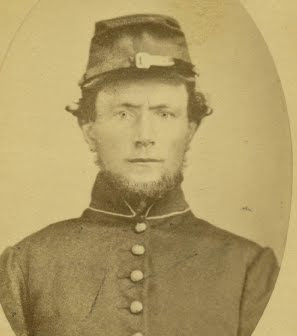
Civil War photo of Daniel Coonradt, my 3X great grandfather.

Grandfather "Duke" Dane, this time in his World War II uniform.


These two are my grandfather Francis S Dane II, in 1916 and 1918 in his color guard outfits.

Civil War photo of Daniel Coonradt, my 3X great grandfather.

Grandfather "Duke" Dane, this time in his World War II uniform.
Sunday, May 22, 2011
New Sports Set at Flickr
I posted a small set of old sports photos to Flickr. This one's particularly fun, the 1895 Bowdoin College Varsity Baseball team, including my great grandfather Francis Smith Dane I, their trusty 2nd baseman:


Monday, May 9, 2011
Useful web page: John Dane & Family
http://www.newerindustries.com/Jim/genealogy/Briggs/Dane-John1587.htm
"John Dane 1587-1658
Born: 1587 in Little Berkhampstead, Herts, England
Died: September 14, 1658 in Roxbury, Massachusetts.
Spouse: Frances (Bowyer) Dane m. October 19, 1605 at Colchester, England. (More Below)
Children: John Dane
Elizabeth (Dane) Howe (More Below)
Mary Dane, Christened May 1, 1617, died May 28, 1617
Rev. Francis Dane (More below)
2nd Spouse: Annis or Annie (Bayford) Chandler, married July 2, 1643 in Roxbury, Massachusetts, born June 12, 1603 in Farnham, Essex, England, died in Roxbury, Massachusetts. She was the only child of Francis Bayford Chandler and his wife, Johan. Francis Bayford Chandler, born April 13, 1597, was the son of Henry and Anne (Bayford) Chandler. Henry, born about 1560, was the son of Thomas and Joane Chandler. She apparently first married her uncle, William Chandler, who died June 19, 1641. William and Annis had 4 children. Secondly to John Dane. After John Dane’s death, Annis married a third time to John Parminter or Parmenter.
Occupation: Tailor
Father’s name: William Dane of Little Berkhampstead, Herts, England, b. about 1561.
Mother’s name: Alicia Pennefather"
"John Dane 1587-1658
Born: 1587 in Little Berkhampstead, Herts, England
Died: September 14, 1658 in Roxbury, Massachusetts.
Spouse: Frances (Bowyer) Dane m. October 19, 1605 at Colchester, England. (More Below)
Children: John Dane
Elizabeth (Dane) Howe (More Below)
Mary Dane, Christened May 1, 1617, died May 28, 1617
Rev. Francis Dane (More below)
2nd Spouse: Annis or Annie (Bayford) Chandler, married July 2, 1643 in Roxbury, Massachusetts, born June 12, 1603 in Farnham, Essex, England, died in Roxbury, Massachusetts. She was the only child of Francis Bayford Chandler and his wife, Johan. Francis Bayford Chandler, born April 13, 1597, was the son of Henry and Anne (Bayford) Chandler. Henry, born about 1560, was the son of Thomas and Joane Chandler. She apparently first married her uncle, William Chandler, who died June 19, 1641. William and Annis had 4 children. Secondly to John Dane. After John Dane’s death, Annis married a third time to John Parminter or Parmenter.
Occupation: Tailor
Father’s name: William Dane of Little Berkhampstead, Herts, England, b. about 1561.
Mother’s name: Alicia Pennefather"
Wednesday, February 16, 2011
History for Joseph Dane of Maine
This is a biography I found of the brother of my great-grandfather. It also includes information on two of his ancestors, who are also my ancestors. Sheds a lot of light on why I'm drawn to the banking world!! I copied this from a book I found on Google called Maine Biographies by Harrie B. Coe, page 260:
"Joseph Dane- The name Dane, as told within itself, is of extremely ancient origin, and applies to the sturdy natives of Denmark, who have played an important part in Nordic affairs since the days of mythology. Danes under the command of the ancient conquerors of England settled in the then known West, and not only preserved their name, by which they were called by the English, but gave their name to many others not of Denmark.
Gradually, representatives of this family settled in America and found their proper place in everyday affairs. In more recent days we find Joseph Dane of Kennebunk, worthily living up to the reputation of the line as a constructive citizen and treasurer of the Kennebunk Savings Bank. Mr. Dane was born March 16, 1864, at Kennebunk, son of Nathan and Caroline L. (Goodwin) Dane, of the same city. His father was a leading farmer and later became treasurer of a savings bank, a course that made him not only independent but highly respected for his scholarly attainments. His grandfather, a typical product of New England soil, was also a prominent man, having been treasurer of the State of Maine during the Civil War.
Mr. Dane attended the public schools, and on completing his studies there followed in his father's footsteps on the farm. He farmed until 1903, when he accepted a position with the Kennebunk Savings Bank. He soon learned the various details of the banking business, and won a commendable place among his superior officers. It was an interesting circumstance that Joseph Dane, his great-uncle, became the first president of this institution, having joined a group of business men in its establishment in 1872. Mr. Dane was succeeded by Robert W. Lord. Later Nathan Dane, the father, became treasurer, and he was succeeded by his son, the incumbent. Its recent statements show assets in excess of $2,000,000.
Mr. Dane served as town treasurer fifteen years and superintendent of Hope Cemetery for twenty-five years. He is a member of the York Lodge, Free and Accepted Masons, and is likewise a member of the Independent Order of Odd Fellows.
Mr. Dane married, in 1893, Loucinda L. Bragdon, of Kennebunk, and their union has been blessed with a son, Joseph Dane, Jr."
"Joseph Dane- The name Dane, as told within itself, is of extremely ancient origin, and applies to the sturdy natives of Denmark, who have played an important part in Nordic affairs since the days of mythology. Danes under the command of the ancient conquerors of England settled in the then known West, and not only preserved their name, by which they were called by the English, but gave their name to many others not of Denmark.
Gradually, representatives of this family settled in America and found their proper place in everyday affairs. In more recent days we find Joseph Dane of Kennebunk, worthily living up to the reputation of the line as a constructive citizen and treasurer of the Kennebunk Savings Bank. Mr. Dane was born March 16, 1864, at Kennebunk, son of Nathan and Caroline L. (Goodwin) Dane, of the same city. His father was a leading farmer and later became treasurer of a savings bank, a course that made him not only independent but highly respected for his scholarly attainments. His grandfather, a typical product of New England soil, was also a prominent man, having been treasurer of the State of Maine during the Civil War.
Mr. Dane attended the public schools, and on completing his studies there followed in his father's footsteps on the farm. He farmed until 1903, when he accepted a position with the Kennebunk Savings Bank. He soon learned the various details of the banking business, and won a commendable place among his superior officers. It was an interesting circumstance that Joseph Dane, his great-uncle, became the first president of this institution, having joined a group of business men in its establishment in 1872. Mr. Dane was succeeded by Robert W. Lord. Later Nathan Dane, the father, became treasurer, and he was succeeded by his son, the incumbent. Its recent statements show assets in excess of $2,000,000.
Mr. Dane served as town treasurer fifteen years and superintendent of Hope Cemetery for twenty-five years. He is a member of the York Lodge, Free and Accepted Masons, and is likewise a member of the Independent Order of Odd Fellows.
Mr. Dane married, in 1893, Loucinda L. Bragdon, of Kennebunk, and their union has been blessed with a son, Joseph Dane, Jr."
Sunday, October 31, 2010
Tuesday, March 30, 2010
Letter from Francis S Dane I to son Duke Dane
Sunday July 3, 1938
Dear Old Son,
Because this is due for arrival on your birthday I'll address it to you though I know you'll share it with Edith just the same. I haven't commented much of that fine letter you wrote to me on my birthday but I've thought a lot about it and have taken a lot of pleasure in reading it over. I expect I did a lot of preaching in many of my letters - much more than necessary - but as time goes on you'll appreciate how much your progress means to your mother and to me. And still does for that matter though now we've gotten ourselves pretty well trained to the idea that you not only know what is right but will do it instinctively. (How many times have I told you that your greatest difficulty was to say "No"!!)
This must be a very special anniversary for you - the first in your new life and your thirtieth. That it may be a beautiful and perfect day for you both we hope and pray. It should be a day of great rejoicing for you two there and for the four or us here. Nathan's boat is due in N.Y. Thursday so that if he can't get home that night he will be here surely to help us celebrate your day. And how we shall enjoy it and only wish you two were here - but the next best thing to that will be the thought of you having a holiday together on or near your beloved ocean with thoughts of business forgotten. Knowing you I sometimes feel sorry you are in business and yet the kind of business you are in does seem to be the very thing for which you are adapted - and a kind to touch your sympathies and bring out your best qualities. And it is a satisfaction to know that you are doing a good job. A job well done is hard to beat and if the good job is also a worth while job doing good to others - what more can one ask? Well only one thing and that is that the discouraging things which are bound to crop out in all jobs shall not get you down - nor make you lose confidence in yourself - nor in the ultimate aim you keep before you. You have many things to be thankful for and you will have many more as the years go by.
I've had a bit of a struggle with that pipe you sent me - the smaller one - but now it's pretty well broken in and I like it very much. The big one I haven't yet tackled but I may take a shot at it on your birthday or some day after Nate arrives to watch the performance.
What a week we have just had. Aunt Julia and Jane arrived Wednesday after we had had three days of pouring rain with the garden beaten down and everything flooded. They were both so tired they hardly knew what they were doing so they wavered about from attic to cellar trying to collect all of Jane's things into one spot for the expressman to take over to Hartsdale N.Y. where Jane is to live after her wedding. To add to their troubles they had flat tires to contend with and silver to pick out. They left Friday afternoon at three (having planned to leave at ten in the morning) and when I got home both mother and Mart were exhausted. Yesterday was clear and cool and today even more so - so we are all revived. We've had open fires all the week and will have another this afternoon after we return from taking Mart to Bedford for a ball game.
Now it's evening. We've had a fine ride up to Carlisle and Groton. Supper as usual and now I must put this in the mail. As you'll see we are sending this to Lederle as we suppose they will know your address and that ought to bring it to you about Friday. Here's hoping the day is glorious and that you are both feeling well and have some special outing but if it should be bad weather just remember the good old verse in Psalms which says "This is the day the Lord has made let us rejoice in it." I've always liked that - perhaps you will, too.
Dearest love
Dad
Dear Old Son,
Because this is due for arrival on your birthday I'll address it to you though I know you'll share it with Edith just the same. I haven't commented much of that fine letter you wrote to me on my birthday but I've thought a lot about it and have taken a lot of pleasure in reading it over. I expect I did a lot of preaching in many of my letters - much more than necessary - but as time goes on you'll appreciate how much your progress means to your mother and to me. And still does for that matter though now we've gotten ourselves pretty well trained to the idea that you not only know what is right but will do it instinctively. (How many times have I told you that your greatest difficulty was to say "No"!!)
This must be a very special anniversary for you - the first in your new life and your thirtieth. That it may be a beautiful and perfect day for you both we hope and pray. It should be a day of great rejoicing for you two there and for the four or us here. Nathan's boat is due in N.Y. Thursday so that if he can't get home that night he will be here surely to help us celebrate your day. And how we shall enjoy it and only wish you two were here - but the next best thing to that will be the thought of you having a holiday together on or near your beloved ocean with thoughts of business forgotten. Knowing you I sometimes feel sorry you are in business and yet the kind of business you are in does seem to be the very thing for which you are adapted - and a kind to touch your sympathies and bring out your best qualities. And it is a satisfaction to know that you are doing a good job. A job well done is hard to beat and if the good job is also a worth while job doing good to others - what more can one ask? Well only one thing and that is that the discouraging things which are bound to crop out in all jobs shall not get you down - nor make you lose confidence in yourself - nor in the ultimate aim you keep before you. You have many things to be thankful for and you will have many more as the years go by.
I've had a bit of a struggle with that pipe you sent me - the smaller one - but now it's pretty well broken in and I like it very much. The big one I haven't yet tackled but I may take a shot at it on your birthday or some day after Nate arrives to watch the performance.
What a week we have just had. Aunt Julia and Jane arrived Wednesday after we had had three days of pouring rain with the garden beaten down and everything flooded. They were both so tired they hardly knew what they were doing so they wavered about from attic to cellar trying to collect all of Jane's things into one spot for the expressman to take over to Hartsdale N.Y. where Jane is to live after her wedding. To add to their troubles they had flat tires to contend with and silver to pick out. They left Friday afternoon at three (having planned to leave at ten in the morning) and when I got home both mother and Mart were exhausted. Yesterday was clear and cool and today even more so - so we are all revived. We've had open fires all the week and will have another this afternoon after we return from taking Mart to Bedford for a ball game.
Now it's evening. We've had a fine ride up to Carlisle and Groton. Supper as usual and now I must put this in the mail. As you'll see we are sending this to Lederle as we suppose they will know your address and that ought to bring it to you about Friday. Here's hoping the day is glorious and that you are both feeling well and have some special outing but if it should be bad weather just remember the good old verse in Psalms which says "This is the day the Lord has made let us rejoice in it." I've always liked that - perhaps you will, too.
Dearest love
Dad
Poem from 1878
I found among the papers of my grandfather Duke Dane, this little Christmas poem. It was clearly written for John Farwell Anderson, who was Duke's great grandfather, my great-great-great grandfather. My guess is that his mother, Anne Jameson (Anderson) is the writer since she died in 1879, while his father died in 1853. On the opposite side of the poem, but in a different handwriting it says "From Martie". John's wife's name was Marcia, so this could be her.
John F. Anderson Child of ours
We come to greet thee these Christmas hours
We bless & watch over thee noble son
Finish the good work you've begun
Let no fooling jeers of child, or wife,
No matter how much of family strife,
Stop you from searching, or let your pen rust
In reading and writing of us who are dust
And if in your searches my son you should find
Some Grandmarm a monkey, oh never you mind
Dec 25th 1878
John F. Anderson Child of ours
We come to greet thee these Christmas hours
We bless & watch over thee noble son
Finish the good work you've begun
Let no fooling jeers of child, or wife,
No matter how much of family strife,
Stop you from searching, or let your pen rust
In reading and writing of us who are dust
And if in your searches my son you should find
Some Grandmarm a monkey, oh never you mind
Dec 25th 1878
Saturday, March 27, 2010
Convocation by Charles W Gilkey
I found this type-written essay among the papers of my grandfather Francis Smith “Duke” Dane. I believe that the author is Charles Whitney Gilkey, who was Dean of the University of Chicago’s Rockefeller Chapel and it appears that the text is from a convocation speech.
Charles W. Gilkey
December 15, 1935
The Road To Success
Last summer on the Maine coast we had as a ship-mate for a day, one of the younger members of the last Byrd expedition. Even on our 36 foot sailboat he showed at once the sailor’s training he had had both under MacMillan in the Arctic and Byrd in the Antarctic. He asked for my orders as captain of our little craft with a discipline, and carried them out with a promptness, which made me feel for the moment almost like an Admiral myself. Our conversation then, and around our fire that evening, ran of course to questions about Little America – and me own to its psychology. What happened among them and inside them when 70 men were shut up together through months of unbroken darkness and cold? Finally he said that I might find the best answer he could give if he loaned me his private journal, which few eyes beside his own had seen. You can guess with what interest I read every line of it written mostly by candle-light in the cold at the end of the long days’ work; but you can hardly guess with what surprise and delight I came upon the inevitable text for the Convocation sermon:
At Sea…………Nov. 15, 1933
“SUCCESS IS NOT A DESTINATION, BUT A JOURNEY.”
The best commentary on that text is the life history to date of the man who wrote it. I picked up some of his history from his mother, who had been our neighbor during the previous summer when he was writing that journal at Little America; and more of it from the Head Master of the boys’ school in New England where he had been a student ten years ago. In spite of his small size and weight he had been chosen captain of the school eleven because of his cool-headed gift of leadership; and had pulled their big game literally out of the air in its closing minutes by his resourcefulness – “SUCCESS IS NOT A DESTINATION, BUT A JOURNEY.”
But the meaning of that entry was even plainer when the Head Master told me the story of his difficulties with his studies, and especially with his English. Failure in that critical subject not only cost him his school diploma, but caused him to drop out of college in his Sophomore year. And yet this boy who could not pass his courses in English, can keep a journal that can make you see sunsets in the South Pacific, and feel the hazards and labors of those anxious weeks of unloading the two ships at the Ice Barrier; can coin an epigram that none of us are likely to forget. Give the lad some vivid experience to tell about; a cause greater than himself to lose himself in; something important to say; and here in these journals he is learning to say it vividly – unforgettably. If success in the use of English consists in passing school and college courses, he never arrived at that destination; but if it consists in learning to use English effectively, here he is already far out beyond that destination, and still going on. “SUCCESS IS NOT A DESTINATION, BUT A JOURNEY.”
A still deeper meaning appears in that sentence when we look at its bearing on his search for his life-work. Like plenty of other students in this confused post-war period, Duke floundered around a long while after he left college. He could neither find the thing to do – nor could he find himself. A summer with MacMillan in the Arctic revealed his love of the sea – and his knack with dogs. This last led to a job in the camp where they were training the dogs for the Byrd expedition; and that, to the chance to go as a dog-driver. Making good in that searching test, he has come home to an highly responsible and useful business opening which may well lead out into a career almost professional in its standards and possibilities. Doubtless, like most boys in their teens, he thought of success as getting a job; but in the twenties, he has revised and enlarged his own conception of what success is. It is not so much getting a good job, as making a good life. It is “NOT A DESTINATION, BUT A JOURNEY.”
Duke took only eight words to paint that picture; but how revealing a picture it is. It shows us life as what sailors call a cruise. You choose the direction in which you want to go – perhaps even the final port where you want to arrive; wind and weather will head you off from this port, and send you into that one. It shows us life as what motorists call a long trip: you decide whether you are bound; but the detours and the state of the roads, tire and engine trouble, determine whether you can spend the night in this or that tow or inn. Still more discerningly, it shows us life and the universe as a mountain range which we explore. Seeing the summit ahead, we think it will be success to reach that; only to find when we stand on that crest a still higher one ahead… It is the same picture which Paul gave us in that great passage which Dean Brumbaugh read for our lesson… “Brethren, I count not myself… but forgetting… and reaching forth… I press on…” For such an adventurous spirit, no stopping-place is final. LIFE AT ITS BEST IS THE PURSUIT OF A FLYING GOAL: And on that view of life, “SUCCESS IS NOT A DESTINATION, BUT A JOURNEY.”
Here then are two conceptions of success; two levels on which men live life. Some of us measure it by the place where we spend the night --- as a destination, some of us by the direction in which we are moving --- as a journey. You have been long enough here at the UC to learn much about this difference as it implies to human thought and knowledge. I once heard one of the most famous scientists ever graduated here recall that about 1900 our own catalogue in physics said that all major discoveries had now been made in that field, and there remained only their application in detail. He went on to point out with delight that since then the new physics had either transcended or transformed all the supposed finalities of 1900. So you have found it here in every area of human thinking …….. But you will go out on Tuesday into a world where on every hand dogmas and prejudices and labels are being thrust on us as finalities. This will be particularly true in an election year as bitterly found as 1936. On the one side experiments will be defended as if they were panaceas; and on the other, old formulas that no longer fit in a changing world will be solemnly used to prove that the earth is flat because it still looks that way. In such times, everybody gets to look for the truth as if it were a dogma in which to spend the night. People who so think wake up sooner or later to discover that the truth is “beyond them”. Remember then from your college days that truth is the quest of a flying goal; and keep as you value your intellectual life, your freedom to do your own thinking in its pursuit. FOR SUCCESS IN THINKING “IS NOT A DESTINATION, BUT A JOURNEY.”
So.. it is also with success in working. Some of you, like Duke may have to flounder around for some time before you find a job, -- still for a man’s life-work, which in these prosaic days has too much dropped out of our vocational vocabulary. It was his “calling”; something he had heard ahead of him like a voice from the possible future; a voice like that which drew Kipling’s “Explorer” on and out into new discoveries…..
“TILL A VOICE, AS BAD AS CONSCIENCE, RANG INTERMINABLE CHANGES ON ONE EVERLASTING WHISPER DAY AND NIGHT REPEATED --- SO: ‘SOMETHING HIDDEN. GO AND FIND IT. GO AND LOOK BEHIND THE RANGES --- SOMETHING LOST BEHIND THE RANGES. LOST AND WAITING FOR YOU. GO…”
Every man’s greatest life-work is like that; and it often takes time and toil to find it. Whistler failed as a soldier and an engineer, and Brooks as a teacher, before they “found their calling”; one as an artist and the other as a preacher. One of the best-known poets in America today started out to be a lawyer --- till he discovered he could never be happy in the law, no matter how much money he made. Money and fame are comfortable inns for the night to be sure; BUT SUCCESS IN ANY REAL “CALLING” IS NOT A DESTINATION, BUT A JOURNEY.”
Still more is all this true in that area where so many of our most difficult issues lie; success in living together. Here all our social and political dogmatists are urging their particular “ism” on us as a finality. “America must choose”, said a radical preacher in NY last Sunday, “between fascism and communism.” Which reminded some of us of the remark of the negro when his preacher faced him with two roads… “one to hell and one to eternal damnation”… “Well, dis nigger takes to the woods.” You have been here long enough to know that not only fascism and communism in Europe, but capitalism and socialism and democracy itself in America, are none of them the finalities that so many people think. It is particularly important that we Americans, who carry the democratic heritage and faith forward in days when it is being so widely abandoned, should penetrate to this deeper meaning of democracy. Our fathers thought of it as a form of government, and complacently boasted that our own, in the language in which the eagle used to scream, “was both theoretically and practically perfect”. We who live in a city where so many of the processes of democracy are obviously breaking down, and so many of the methods of the dictatorship are so obviously emerging, will hardly say that. But what need we have to realize what our own TV Smith has helped so many of us to see, that democracy is also a way of life: moving forward ever toward a larger measure of justice and opportunity and participation for the common man, and of concern for each and every one of “the least of these”. In the adventure of democracy, “SUCCESS IS NOT A DESTINATION, BUT A JOURNEY.”
And Above all remember this in religion. Our age like every other is full of those who regard their creed or their church or their latest fad as a closed finality; and in strong reaction from the, those who have abandoned creed and church, faith in God and man, --- and finding no shelter in these, have lost all sense of direction and quest in life, have become spiritual defeatists, and to all the ultimate questions about the meaning of life can only shrug their shoulders and say, “What’s the use?” To both of these, Duke has pointed the way.. Faith in God and man and life itself is not a stopping-place where our questions cease. It is a way of living, wherein we move out and on the higher toward the Highest, in the faith that neither life nor death nor the universe will bring us to the end of the road. Faith in yourself and in others, in God and in immortality, is that kind of an adventure… IT IS “NOT A DESTINATION, BUT A JOURNEY.”
Retyped by Kyle Dane, March 25, 2010
Charles W. Gilkey
December 15, 1935
The Road To Success
Last summer on the Maine coast we had as a ship-mate for a day, one of the younger members of the last Byrd expedition. Even on our 36 foot sailboat he showed at once the sailor’s training he had had both under MacMillan in the Arctic and Byrd in the Antarctic. He asked for my orders as captain of our little craft with a discipline, and carried them out with a promptness, which made me feel for the moment almost like an Admiral myself. Our conversation then, and around our fire that evening, ran of course to questions about Little America – and me own to its psychology. What happened among them and inside them when 70 men were shut up together through months of unbroken darkness and cold? Finally he said that I might find the best answer he could give if he loaned me his private journal, which few eyes beside his own had seen. You can guess with what interest I read every line of it written mostly by candle-light in the cold at the end of the long days’ work; but you can hardly guess with what surprise and delight I came upon the inevitable text for the Convocation sermon:
At Sea…………Nov. 15, 1933
“SUCCESS IS NOT A DESTINATION, BUT A JOURNEY.”
The best commentary on that text is the life history to date of the man who wrote it. I picked up some of his history from his mother, who had been our neighbor during the previous summer when he was writing that journal at Little America; and more of it from the Head Master of the boys’ school in New England where he had been a student ten years ago. In spite of his small size and weight he had been chosen captain of the school eleven because of his cool-headed gift of leadership; and had pulled their big game literally out of the air in its closing minutes by his resourcefulness – “SUCCESS IS NOT A DESTINATION, BUT A JOURNEY.”
But the meaning of that entry was even plainer when the Head Master told me the story of his difficulties with his studies, and especially with his English. Failure in that critical subject not only cost him his school diploma, but caused him to drop out of college in his Sophomore year. And yet this boy who could not pass his courses in English, can keep a journal that can make you see sunsets in the South Pacific, and feel the hazards and labors of those anxious weeks of unloading the two ships at the Ice Barrier; can coin an epigram that none of us are likely to forget. Give the lad some vivid experience to tell about; a cause greater than himself to lose himself in; something important to say; and here in these journals he is learning to say it vividly – unforgettably. If success in the use of English consists in passing school and college courses, he never arrived at that destination; but if it consists in learning to use English effectively, here he is already far out beyond that destination, and still going on. “SUCCESS IS NOT A DESTINATION, BUT A JOURNEY.”
A still deeper meaning appears in that sentence when we look at its bearing on his search for his life-work. Like plenty of other students in this confused post-war period, Duke floundered around a long while after he left college. He could neither find the thing to do – nor could he find himself. A summer with MacMillan in the Arctic revealed his love of the sea – and his knack with dogs. This last led to a job in the camp where they were training the dogs for the Byrd expedition; and that, to the chance to go as a dog-driver. Making good in that searching test, he has come home to an highly responsible and useful business opening which may well lead out into a career almost professional in its standards and possibilities. Doubtless, like most boys in their teens, he thought of success as getting a job; but in the twenties, he has revised and enlarged his own conception of what success is. It is not so much getting a good job, as making a good life. It is “NOT A DESTINATION, BUT A JOURNEY.”
Duke took only eight words to paint that picture; but how revealing a picture it is. It shows us life as what sailors call a cruise. You choose the direction in which you want to go – perhaps even the final port where you want to arrive; wind and weather will head you off from this port, and send you into that one. It shows us life as what motorists call a long trip: you decide whether you are bound; but the detours and the state of the roads, tire and engine trouble, determine whether you can spend the night in this or that tow or inn. Still more discerningly, it shows us life and the universe as a mountain range which we explore. Seeing the summit ahead, we think it will be success to reach that; only to find when we stand on that crest a still higher one ahead… It is the same picture which Paul gave us in that great passage which Dean Brumbaugh read for our lesson… “Brethren, I count not myself… but forgetting… and reaching forth… I press on…” For such an adventurous spirit, no stopping-place is final. LIFE AT ITS BEST IS THE PURSUIT OF A FLYING GOAL: And on that view of life, “SUCCESS IS NOT A DESTINATION, BUT A JOURNEY.”
Here then are two conceptions of success; two levels on which men live life. Some of us measure it by the place where we spend the night --- as a destination, some of us by the direction in which we are moving --- as a journey. You have been long enough here at the UC to learn much about this difference as it implies to human thought and knowledge. I once heard one of the most famous scientists ever graduated here recall that about 1900 our own catalogue in physics said that all major discoveries had now been made in that field, and there remained only their application in detail. He went on to point out with delight that since then the new physics had either transcended or transformed all the supposed finalities of 1900. So you have found it here in every area of human thinking …….. But you will go out on Tuesday into a world where on every hand dogmas and prejudices and labels are being thrust on us as finalities. This will be particularly true in an election year as bitterly found as 1936. On the one side experiments will be defended as if they were panaceas; and on the other, old formulas that no longer fit in a changing world will be solemnly used to prove that the earth is flat because it still looks that way. In such times, everybody gets to look for the truth as if it were a dogma in which to spend the night. People who so think wake up sooner or later to discover that the truth is “beyond them”. Remember then from your college days that truth is the quest of a flying goal; and keep as you value your intellectual life, your freedom to do your own thinking in its pursuit. FOR SUCCESS IN THINKING “IS NOT A DESTINATION, BUT A JOURNEY.”
So.. it is also with success in working. Some of you, like Duke may have to flounder around for some time before you find a job, -- still for a man’s life-work, which in these prosaic days has too much dropped out of our vocational vocabulary. It was his “calling”; something he had heard ahead of him like a voice from the possible future; a voice like that which drew Kipling’s “Explorer” on and out into new discoveries…..
“TILL A VOICE, AS BAD AS CONSCIENCE, RANG INTERMINABLE CHANGES ON ONE EVERLASTING WHISPER DAY AND NIGHT REPEATED --- SO: ‘SOMETHING HIDDEN. GO AND FIND IT. GO AND LOOK BEHIND THE RANGES --- SOMETHING LOST BEHIND THE RANGES. LOST AND WAITING FOR YOU. GO…”
Every man’s greatest life-work is like that; and it often takes time and toil to find it. Whistler failed as a soldier and an engineer, and Brooks as a teacher, before they “found their calling”; one as an artist and the other as a preacher. One of the best-known poets in America today started out to be a lawyer --- till he discovered he could never be happy in the law, no matter how much money he made. Money and fame are comfortable inns for the night to be sure; BUT SUCCESS IN ANY REAL “CALLING” IS NOT A DESTINATION, BUT A JOURNEY.”
Still more is all this true in that area where so many of our most difficult issues lie; success in living together. Here all our social and political dogmatists are urging their particular “ism” on us as a finality. “America must choose”, said a radical preacher in NY last Sunday, “between fascism and communism.” Which reminded some of us of the remark of the negro when his preacher faced him with two roads… “one to hell and one to eternal damnation”… “Well, dis nigger takes to the woods.” You have been here long enough to know that not only fascism and communism in Europe, but capitalism and socialism and democracy itself in America, are none of them the finalities that so many people think. It is particularly important that we Americans, who carry the democratic heritage and faith forward in days when it is being so widely abandoned, should penetrate to this deeper meaning of democracy. Our fathers thought of it as a form of government, and complacently boasted that our own, in the language in which the eagle used to scream, “was both theoretically and practically perfect”. We who live in a city where so many of the processes of democracy are obviously breaking down, and so many of the methods of the dictatorship are so obviously emerging, will hardly say that. But what need we have to realize what our own TV Smith has helped so many of us to see, that democracy is also a way of life: moving forward ever toward a larger measure of justice and opportunity and participation for the common man, and of concern for each and every one of “the least of these”. In the adventure of democracy, “SUCCESS IS NOT A DESTINATION, BUT A JOURNEY.”
And Above all remember this in religion. Our age like every other is full of those who regard their creed or their church or their latest fad as a closed finality; and in strong reaction from the, those who have abandoned creed and church, faith in God and man, --- and finding no shelter in these, have lost all sense of direction and quest in life, have become spiritual defeatists, and to all the ultimate questions about the meaning of life can only shrug their shoulders and say, “What’s the use?” To both of these, Duke has pointed the way.. Faith in God and man and life itself is not a stopping-place where our questions cease. It is a way of living, wherein we move out and on the higher toward the Highest, in the faith that neither life nor death nor the universe will bring us to the end of the road. Faith in yourself and in others, in God and in immortality, is that kind of an adventure… IT IS “NOT A DESTINATION, BUT A JOURNEY.”
Retyped by Kyle Dane, March 25, 2010
Thursday, March 11, 2010
NBC Genealogy show
I watched the NBC show "Who Do You Think You Are" last night - the first episode with Sarah Jessica Parker. I watched online on my computer because I missed it when it was broadcast.
As I was watching the show, I was looking very carefully, knowing that the Danes have a connection to the Salem witch trials. So when the name "Dutch" went by on the screen, I immediately said to myself - "that's a family name of ours." I was poking around on Facebook and found the group to become a fan of the show, and while there, I found that someone had placed the genealogy of Sarah on Rootsweb . When I looked at that tree, I found that the Esther Elwell mentioned on the television show was born Esther Dutch, daughter of Osmond Dutch. A quick search of my Family Tree Maker database found that I have Osmond Dutch in my file, but not Esther. Instead, I had her sister Alice Dutch.
I also have a handwritten note in the Dane section of the genealogy book that I have that says John Dane, one of my ancestors was a cabinet maker in Salem and was a juror in the witch trials. It also says "Sorrow over mistake at shedding blood." It turns out that this John Dane's father, also named John Dane, had been married to Alice Dutch (they had no children together, and he died in 1683 before the trials. Alice remarried).
Pretty cool to find that my connection to this nationally broadcast show was so close. I am definitely going to keep watching. Pretty fun for a genealogy buff like me.
As I was watching the show, I was looking very carefully, knowing that the Danes have a connection to the Salem witch trials. So when the name "Dutch" went by on the screen, I immediately said to myself - "that's a family name of ours." I was poking around on Facebook and found the group to become a fan of the show, and while there, I found that someone had placed the genealogy of Sarah on Rootsweb . When I looked at that tree, I found that the Esther Elwell mentioned on the television show was born Esther Dutch, daughter of Osmond Dutch. A quick search of my Family Tree Maker database found that I have Osmond Dutch in my file, but not Esther. Instead, I had her sister Alice Dutch.
I also have a handwritten note in the Dane section of the genealogy book that I have that says John Dane, one of my ancestors was a cabinet maker in Salem and was a juror in the witch trials. It also says "Sorrow over mistake at shedding blood." It turns out that this John Dane's father, also named John Dane, had been married to Alice Dutch (they had no children together, and he died in 1683 before the trials. Alice remarried).
Pretty cool to find that my connection to this nationally broadcast show was so close. I am definitely going to keep watching. Pretty fun for a genealogy buff like me.
Wednesday, March 10, 2010
Biography of Francis Smith "Duke" Dane
This is a biography of my grandfather. It comes from two sources. The first is an article from an Armed Forces newspaper clipping. Unfortunately, there is a continuation and I don’t have the second part, so there is going to be an abrupt end to that article. But I have a separate bio from a newsletter from the Tangley Oaks Educational Center, Duke’s last employer which appears to be an almost word for word reprint of the AFBAA article, and it has its own ending, so I’ll tack that onto the end. I will number my own footnotes and include them at the end.
Armed Forces Benefit & Aid Association Journal
August 1976, Volume 3, Number 24.
In days of old, men were bold
There’s an old line – “in days of old when men were bold…” which would apply to a new AFBAA Representative – Francis Smith “Duke” Dane. Here is the story of this most unique and worldly individual.
“Duke” Dane was born on July 8, 1908 in Lexington, Massachusetts. His father (1) was employed by the Hood Rubber Company and worked there for 48 years retiring as a Vice President. One of the three children in the family, Duke’s brother (2) is Dean of Classics at Bowdoin College and his sister (3) has been involved in religious work for many years.
As a 13 year old, Mr. Dane attended a Boys Camp and since he could out-scrap everyone in the tent he was given the title of “Duke of the Tent” and the name stuck.
In high school and college he participated in all sports and dramatics. As captain of his high school football team he played every minute of every game as Quarterback on offense and Linebacker on defense. His playing weight – 128 pounds. In college at Bowdoin he played football and hockey for 2 years. During summer vacations in high school Duke had his first job – selling with the Fuller Brush Company.
Adventures Begin
At age 12 Duke Dane went to sea as the first cabin boy on the maiden cruise of the schooner Bowdoin under commander Donald B MacMillan, an arctic explorer. Upon graduation from Loomis Prep in Windsor, Connecticut (high school) he again went to sea on the schooners Radio and Bowdoin and was on the MacMillan Expedition to the Arctic at age 19.
Following his return from the Arctic he worked his way from the East Coast to the west Coast and back on the Freighter Orleans as a seaman. This was before the dark days of maritime unions when hours were long and the food unspeakable.
Joins Byrd Expedition
In 1933, at the age of 25, Duke Dane joined the Byrd Expedition II in preparation for a trip to the Antarctic. He became head of the dog drivers and working 15 hours a day spent the summer of 1933 training 158 huskies and other drivers for the coming expedition. In October, 1933 they sailed from Boston on the Freighter Rupert with Duke doing double duty as a seaman and dog handler. In January, 1934, they arrived at Little America and off loaded the 54 members of the expedition along with the dogs and their supplies.
For one year the expedition remained in Antarctica. The Antarctic night last from May to October and conditions were unbelievably cruel. In all, Duke Dane and 6 other members skied over 3,000 miles while completing various missions before the winter night set in.
The expedition departed Little America in January, 1935 and had to sail through the roughest seas known to man. Winds in excess of 50 knots caused the ship to take 27 degree rolls through the pounding seas. Upon return to the United States, their ship was met by President Franklin Roosevelt who personally came to the dock to meet them. The Expedition members were sent to the Halls of Congress where they each received a Congressional Medal of Honor.
Duke does not talk about his medal, he feels he didn’t deserve it. But the Congress and the President disagreed so he accepted for his family.
Until World War II came along, Duke Dane had a varied career which included 12 years with Lederle Labs selling special products to Doctors, Veterinarians, Hospitals, Pharmacies etc. where he was involved with hiring, training, and working with men in the field, running periodic sales meetings and overseeing the office staff. As head of the Animal Health Department of Wyeth Labs, he called on dairy and poultry farmers, ranchers, feed lot operators, sheep and cattle men to provide training and conduct lectures. Duke has also had several years in Financial Planning – insurance and mutual funds.
World War II brought new adventures for Duke Dane. He joined the Army Transport Service and was immediate given the tough job as First Mate on a 100 foot schooner which sailed from San Pedro, California for Australia. The trip took 48 days and the discontentment of the crew made it a very rough crossing. After that trip, Duke served as Second Mate in the Merchant Marine on ships all over the South Pacific.
(This is the point of the continuation. The rest is from the Tangley Oaks newsletter “Educator News”, dated June 19, 1979)
When you add to all of this the fact that Duke is also a Kiwanian, a scout leader, sportsman, tennis and squash player, sails, camps, mountain climbs, does church work, gardening, acrobatics and expressive dancing, you know we’re talking about “one helluva man.” In his spare time, he also lectures before school and community groups and other organizations on his travels and incredible experiences with the Third Expedition. His pictures and slide presentations are considered priceless. We welcome you, Duke, to our organization. It’s a pleasure and privilege to have you break the ice with us with your first business during May; and we’re looking forward to many years of close association.
Retyped by Kyle Dane (grandson of Francis Smith “Duke” Dane II), March 7, 2010.
(1) Duke’s father was Francis Smith Dane I.
(2) Duke’s brother is Nathan Dane. Duke also attended Bowdoin, but did not graduate, much to his parent’s chagrin.
(3) Duke’s sister is Marcia Winter Anderson Dane (Aunt Marcia to most of our family).
Armed Forces Benefit & Aid Association Journal
August 1976, Volume 3, Number 24.
In days of old, men were bold
There’s an old line – “in days of old when men were bold…” which would apply to a new AFBAA Representative – Francis Smith “Duke” Dane. Here is the story of this most unique and worldly individual.
“Duke” Dane was born on July 8, 1908 in Lexington, Massachusetts. His father (1) was employed by the Hood Rubber Company and worked there for 48 years retiring as a Vice President. One of the three children in the family, Duke’s brother (2) is Dean of Classics at Bowdoin College and his sister (3) has been involved in religious work for many years.
As a 13 year old, Mr. Dane attended a Boys Camp and since he could out-scrap everyone in the tent he was given the title of “Duke of the Tent” and the name stuck.
In high school and college he participated in all sports and dramatics. As captain of his high school football team he played every minute of every game as Quarterback on offense and Linebacker on defense. His playing weight – 128 pounds. In college at Bowdoin he played football and hockey for 2 years. During summer vacations in high school Duke had his first job – selling with the Fuller Brush Company.
Adventures Begin
At age 12 Duke Dane went to sea as the first cabin boy on the maiden cruise of the schooner Bowdoin under commander Donald B MacMillan, an arctic explorer. Upon graduation from Loomis Prep in Windsor, Connecticut (high school) he again went to sea on the schooners Radio and Bowdoin and was on the MacMillan Expedition to the Arctic at age 19.
Following his return from the Arctic he worked his way from the East Coast to the west Coast and back on the Freighter Orleans as a seaman. This was before the dark days of maritime unions when hours were long and the food unspeakable.
Joins Byrd Expedition
In 1933, at the age of 25, Duke Dane joined the Byrd Expedition II in preparation for a trip to the Antarctic. He became head of the dog drivers and working 15 hours a day spent the summer of 1933 training 158 huskies and other drivers for the coming expedition. In October, 1933 they sailed from Boston on the Freighter Rupert with Duke doing double duty as a seaman and dog handler. In January, 1934, they arrived at Little America and off loaded the 54 members of the expedition along with the dogs and their supplies.
For one year the expedition remained in Antarctica. The Antarctic night last from May to October and conditions were unbelievably cruel. In all, Duke Dane and 6 other members skied over 3,000 miles while completing various missions before the winter night set in.
The expedition departed Little America in January, 1935 and had to sail through the roughest seas known to man. Winds in excess of 50 knots caused the ship to take 27 degree rolls through the pounding seas. Upon return to the United States, their ship was met by President Franklin Roosevelt who personally came to the dock to meet them. The Expedition members were sent to the Halls of Congress where they each received a Congressional Medal of Honor.
Duke does not talk about his medal, he feels he didn’t deserve it. But the Congress and the President disagreed so he accepted for his family.
Until World War II came along, Duke Dane had a varied career which included 12 years with Lederle Labs selling special products to Doctors, Veterinarians, Hospitals, Pharmacies etc. where he was involved with hiring, training, and working with men in the field, running periodic sales meetings and overseeing the office staff. As head of the Animal Health Department of Wyeth Labs, he called on dairy and poultry farmers, ranchers, feed lot operators, sheep and cattle men to provide training and conduct lectures. Duke has also had several years in Financial Planning – insurance and mutual funds.
World War II brought new adventures for Duke Dane. He joined the Army Transport Service and was immediate given the tough job as First Mate on a 100 foot schooner which sailed from San Pedro, California for Australia. The trip took 48 days and the discontentment of the crew made it a very rough crossing. After that trip, Duke served as Second Mate in the Merchant Marine on ships all over the South Pacific.
(This is the point of the continuation. The rest is from the Tangley Oaks newsletter “Educator News”, dated June 19, 1979)
When you add to all of this the fact that Duke is also a Kiwanian, a scout leader, sportsman, tennis and squash player, sails, camps, mountain climbs, does church work, gardening, acrobatics and expressive dancing, you know we’re talking about “one helluva man.” In his spare time, he also lectures before school and community groups and other organizations on his travels and incredible experiences with the Third Expedition. His pictures and slide presentations are considered priceless. We welcome you, Duke, to our organization. It’s a pleasure and privilege to have you break the ice with us with your first business during May; and we’re looking forward to many years of close association.
Retyped by Kyle Dane (grandson of Francis Smith “Duke” Dane II), March 7, 2010.
(1) Duke’s father was Francis Smith Dane I.
(2) Duke’s brother is Nathan Dane. Duke also attended Bowdoin, but did not graduate, much to his parent’s chagrin.
(3) Duke’s sister is Marcia Winter Anderson Dane (Aunt Marcia to most of our family).
Subscribe to:
Posts (Atom)